
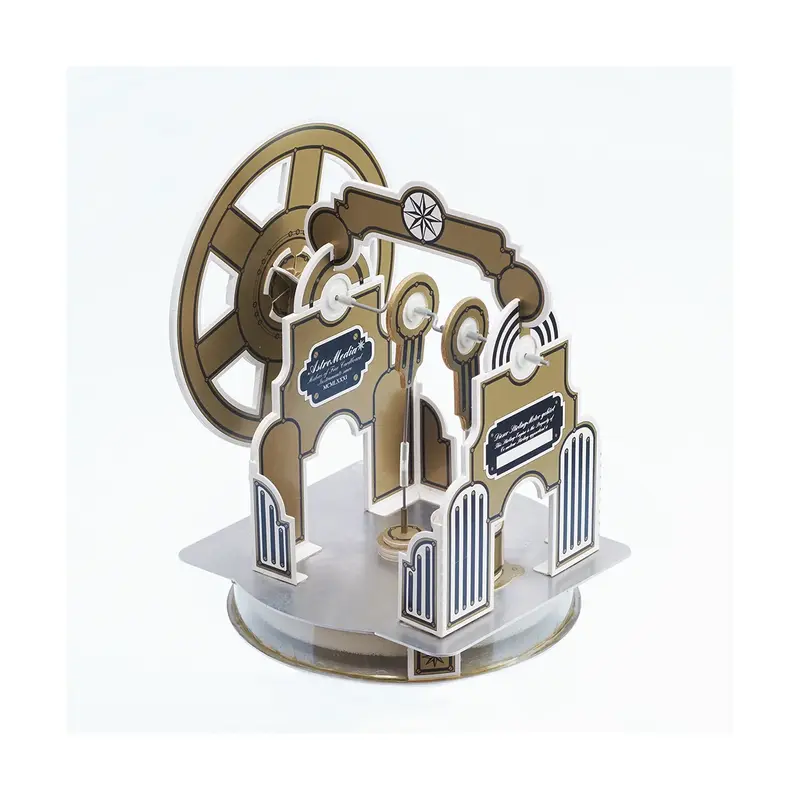

Find out how a Stirling Engine works! The Stirling Engine kit is a great gift for engineers!
With this beautiful Stirling engine construction kit from Astromedia, you can build your very own cardboard Stirling Engine model – Just place the engine on a cup with hot water (tea/coffee) and it will run quietly for up to an hour! This kit is perfect for people who are interested in engineering and want to learn how engines work!
The Astromedia Stirling engine can also be used to power the Astromedia Ferris Wheel!
The revolutionary concept of this engine was devised by the Scottish priest and engineer Robert Stirling. The enthusiastic fusspot lived during the most vibrant time of the industrial revolution, whose hunger for energy was fed by the steam engines invented by James Watt in 1776. His compassion for victims of boiler explosions led him to envision an engine that would work without the high pressure of ordinary steam engines.
It works by externally heating the engine externally causing the gases inside to heat and expand. This gas then moves to a different part of the engine and a piston takes heat energy from the gas which can then be converted to mechanical power.
How it works:
A sealed cylinder is heated at one end and cooled at the other. A piston moves the enclosed air back and forth between the ends. Each time the air expands and contracts, the resulting pressure change is transmitted to a working piston that turns a crank shaft. The engine can use any any energy source that produces a temperature difference between the two ends of the cylinder: open fire, solar energy, otherwise unused heat or cold, etc.
Tip:
Instead of putting the engine on top of a cup of tea, place it on a frozen cold pack and start the flywheel the other way round.
Curious Minds Did You Know: The Stirling engine was initially intended to rival the steam engine but was instead primarily used for low power domestic uses!
The kit comes complete with all necessary parts such as laser-cut aluminium plates, low-friction PVC bearings, steel crank, and vinyl seal. The instruction booklet also contains information about the historical background and tuning tips for longer running time.
Construction time: 20-30 hours
Size: 12.6 x 12.6 x 16.5 cm
Suitable for ages 12 and up.

Reviews
There are no reviews yet.